






Local SEO for SaaS: Geographic Targeting Strategies That Work
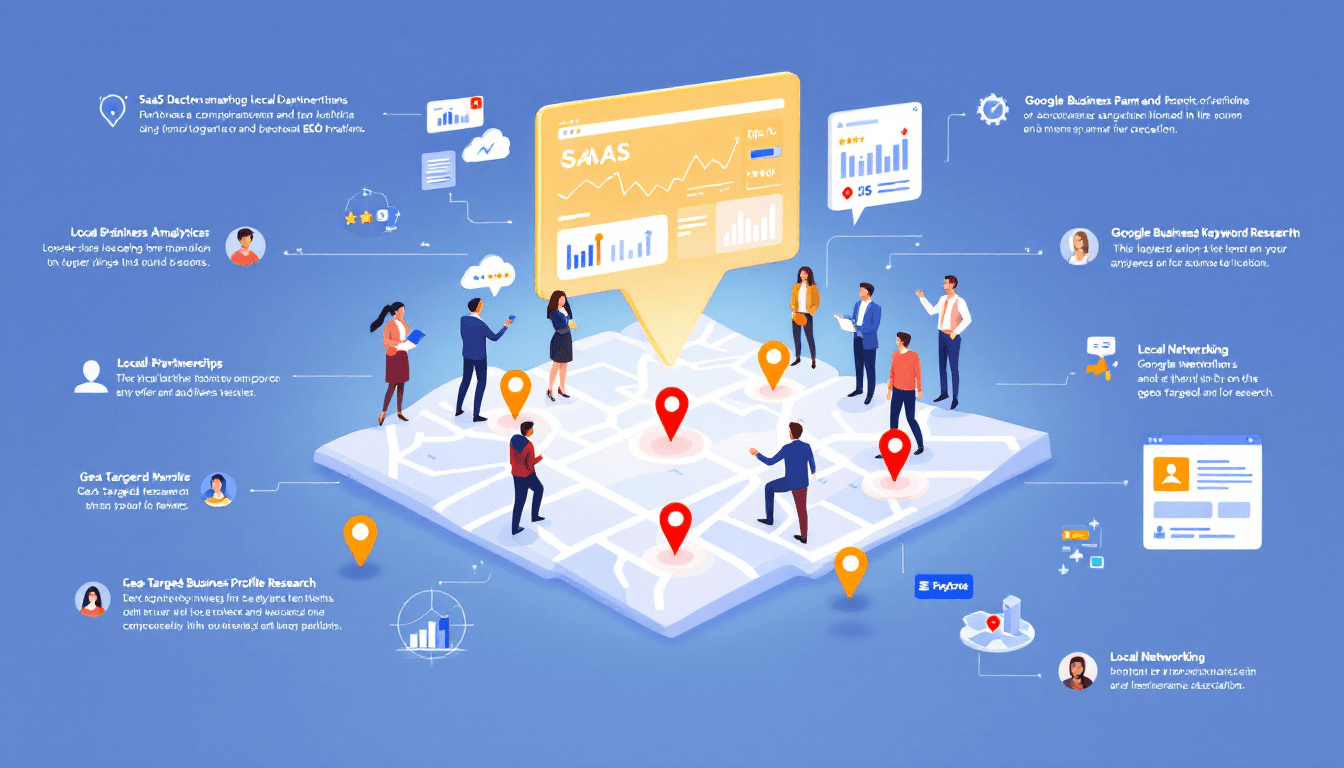
Most SaaS founders assume local SEO is only for brick-and-mortar businesses. Coffee shops, dentists, plumbers—sure. But a cloud-based software product? Why would location matter?
Here's what they're missing: local SEO is one of the most overlooked competitive advantages for SaaS companies.
While your competitors battle it out for global rankings against enterprise giants with massive budgets, you can dominate regional search results with significantly less competition. A SaaS company targeting "project management software Chicago" faces far fewer rivals than one competing for "project management software" globally.
The opportunity is real: local searches drive higher conversion rates, attract more qualified leads, and build authority faster than pure global SEO strategies. In this guide, I'll show you exactly how to leverage geographic targeting to accelerate your SaaS growth.
Why Local SEO Matters for SaaS Companies
The Overlooked Opportunity
Most SaaS companies completely ignore local search optimization, assuming their cloud-based nature makes geography irrelevant. This creates a massive gap in the market for companies willing to invest in geo-targeted strategies.
Consider this: when someone searches for "accounting software for Toronto businesses," they're showing high purchase intent and geographic specificity. That's a warm lead actively looking for a solution that understands their local context.
The Numbers Tell the Story
Local search statistics reveal compelling opportunities:
- 46% of all Google searches have local intent
- Local searches lead to purchases 28% more often than non-local searches
- 88% of consumers who do a local search visit or call a store within 24 hours
- "Near me" searches have grown by over 500% in recent years
While these stats traditionally favor physical businesses, SaaS companies can tap into the same search behaviors by positioning themselves as location-aware solutions.
Reduced Competition = Faster Results
Competing for "CRM software" means battling Salesforce, HubSpot, and thousands of others. But "CRM software for Seattle real estate agents" narrows the field dramatically. You're targeting a specific audience with specific needs, and you can rank faster with less authority.
Local vs. Global SEO: A Quick Comparison
| Factor | Global SEO | Local SEO |
|---|---|---|
| Competition Level | Extremely high (enterprise giants) | Low to moderate (regional players) |
| Time to Rank | 12–24+ months | 3–6 months |
| Keyword Volume | High volume, lower conversion | Lower volume, higher conversion |
| Backlink Requirements | Hundreds of high-authority links | Dozens of relevant local links |
| Content Investment | Massive content libraries needed | Focused, location-specific pages |
| Search Intent | Mixed (informational + commercial) | High commercial/transactional intent |
| ROI Timeline | Long-term payoff | Faster return on investment |
Real Use Cases: When SaaS Benefits from Local Presence
Localized Features and Compliance
Some SaaS products inherently serve regional needs:
- Payroll software must handle state or country-specific tax laws
- Legal tech varies by jurisdiction and local regulations
- Healthcare SaaS navigates regional HIPAA or privacy requirements
- Real estate platforms serve market-specific MLS integrations
If your product adapts to local rules, regulations, or standards, local SEO helps you reach users searching for those specific features.
Regional Payment and Currency Support
When your SaaS supports localized payment methods—like iDEAL in the Netherlands, PIX in Brazil, or Interac in Canada—geo-targeted landing pages help you capture users searching for solutions that accept their preferred payment options.
Support and Service Advantages
Even cloud-based tools benefit from highlighting:
- Local support teams or business hours in specific time zones
- In-person training or onboarding in key cities
- Regional customer success managers who understand local markets
- Language support beyond simple translation (cultural localization)
Local Partnerships and Integrations
If your SaaS integrates with region-specific platforms—say, Australian invoicing systems or UK payroll providers—you can create location pages that highlight these partnerships and rank for related searches.
Creating a Local SEO Strategy for SaaS
Step 1: Research Geo-Targeted Keywords
Start by identifying keywords that combine your product category with location modifiers.
Use these keyword patterns:
- [Product] + [City/Region] (e.g., "invoicing software Vancouver")
- [Product] for [Local Industry] (e.g., "CRM for Miami law firms")
- [Product] + [Local Feature] (e.g., "payroll software California compliance")
- [Local Problem] + [Solution] (e.g., "GDPR-compliant CRM London")
Tools to use:
- Google Keyword Planner (filter by location)
- Ahrefs or SEMrush (geo-specific keyword research)
- AnswerThePublic (filter by country)
- Google Trends (compare regional interest)
Step 2: Analyze Regional Competition
For each target location, evaluate:
- Who currently ranks for geo-targeted keywords?
- What content formats are they using?
- How strong are their backlink profiles?
- Are there gaps you can exploit?
Often, you'll find minimal competition for city-specific SaaS searches—a clear opportunity to dominate quickly.
Step 3: Identify High-Converting Local Modifiers
Not all location keywords convert equally. Prioritize searches with commercial intent:
- High intent: "buy," "pricing," "demo," "trial"
- Medium intent: "best," "top," "review," "comparison"
- Low intent: "what is," "how to," "guide"
Combine these with location terms for targeted landing page ideas.
Step 4: Set Up Location-Based Tracking
Before launching geo-targeted campaigns, establish proper tracking:
- Google Analytics: Create location-based segments
- Google Search Console: Filter performance by country/region
- Rank tracking tools: Monitor keyword positions by location
- UTM parameters: Track traffic sources from geo-specific pages
Google Business Profile Optimization for SaaS
Can Virtual Businesses Use Google Business Profile?
Yes—but with important caveats. Google Business Profile (GBP) is designed for businesses that serve customers at a physical location or travel to customers. However, service-area businesses can create profiles if they have a verifiable physical address.
You CAN use GBP if:
- You have a registered business address (even if you don't meet customers there)
- You serve customers in specific geographic areas
- You provide legitimate services in those locations (like consultations, demos, or support)
You CANNOT use GBP if:
- Your SaaS is purely digital with no local presence or service
- You try to create multiple profiles for purely digital services in multiple cities
- You use fake addresses or virtual offices solely for SEO purposes
Setting Up a Compliant GBP for SaaS
If your SaaS qualifies, here's how to optimize your profile:
1. Choose the Right Categories
Primary category examples:
- Software Company
- Computer Software Company
- Internet Marketing Service
Secondary categories:
- Business Consulting
- Management Consultant
- Marketing Consultant
2. Service Area Setup
If you don't serve customers at your physical location, hide your address and define your service areas instead:
- List specific cities, regions, or postal codes
- Prioritize areas where you have existing customers
- Update service areas as you expand
3. Optimize Your Profile
- Business description: Clearly explain your SaaS and local relevance (750 characters max)
- Services: List key features as services with descriptions
- Posts: Share updates, offers, and content regularly
- Photos: Include team photos, product screenshots, and branded images
- Attributes: Add relevant business attributes when available
4. Generate and Respond to Reviews
Encourage satisfied customers in your service areas to leave reviews mentioning their location or use case:
"This CRM has been perfect for our Austin marketing agency—great local support!"
Always respond to reviews promptly and professionally, acknowledging the reviewer's location when relevant.
Local Citation Management
Even for virtual SaaS businesses, citations help with local visibility:
- Industry directories: Include your location when submitting
- Local business directories: List on regional chamber of commerce sites if you're a member
- NAP consistency: Keep Name, Address, Phone consistent across all listings
- Schema markup: Add LocalBusiness schema to location-specific pages
Building Location-Specific Landing Pages
The Anatomy of High-Converting Geo-Pages
Effective location landing pages balance localization with scalability.
Essential components:
1. Location-Specific Headlines
- ❌ Generic: "Project Management Software"
- ✅ Localized: "Project Management Software for Boston Teams"
2. Localized Content and Context
- Reference local industries, companies, or market conditions
- Mention regional regulations, standards, or requirements
- Include testimonials from customers in that area
- Highlight local team members or offices (if applicable)
3. Unique Value Propositions
Explain why location matters for your SaaS:
- "Designed for UK tax compliance"
- "Integrated with Australian banking systems"
- "Supports California data privacy laws"
4. Local Social Proof
- Customer logos from regional companies
- Case studies featuring local businesses
- Testimonials mentioning the city or region
- Statistics about users in that market
5. Clear CTAs
- "Start Your Free Trial in Toronto"
- "Book a Demo with Our Seattle Team"
- "See Pricing for Australian Businesses"
Avoiding Duplicate Content Issues
Creating multiple location pages raises duplicate content concerns. Here's how to keep each page unique:
Location-specific elements:
- Unique intro paragraphs referencing local context
- Different case studies or testimonials per location
- Regional statistics or data where available
- Local images or photos (team members, events, customers)
- City-specific schema markup (LocalBusiness structured data)
Content variations:
- Mention local competitors or alternatives
- Reference regional events, industries, or partnerships
- Highlight area-specific features or integrations
- Adjust copy to reflect local language or terminology
Technical SEO:
- Use unique URLs:
/pricing/boston,/pricing/chicago(not parameters) - Write unique title tags and meta descriptions
- Implement canonical tags correctly
- Add hreflang tags for international pages
Regional Pricing or Feature Variations
If your SaaS offers location-based pricing or features, highlight this transparently:
- Currency localization: Show prices in local currency
- Regional discounts: Offer introductory pricing for new markets
- Feature differences: Clearly explain what's included by region
- Compliance features: Emphasize certifications or local integrations
Internal Linking Strategy
Connect your location pages strategically:
- Hub page: Create a main "Locations" or "Regions" page linking to all geo-pages
- Breadcrumbs: Show clear navigation paths
- Related locations: Link nearby cities or regions (e.g., Boston ↔ New York)
- Blog integration: Link from relevant blog posts to location pages
- Footer navigation: Consider a locations section in your footer
Local Link Building Beyond Directories
Directories are a starting point, but stronger local backlinks come from genuine regional connections.
Regional Business Partnerships
Collaborate with complementary businesses in target markets:
- Referral partnerships: Exchange links and referrals
- Integration partners: Co-market with local SaaS or service providers
- Affiliate programs: Recruit location-based affiliates
- Co-marketing campaigns: Joint webinars, content, or events
Local Tech Meetups and Events
Active participation in regional tech communities builds both links and reputation:
- Sponsor local meetups (often includes website backlinks)
- Speak at regional conferences (speaker pages link to companies)
- Host your own events (attracts local press and blogger coverage)
- Participate in hackathons (community sites often list sponsors)
Chamber of Commerce and Business Associations
If you have a physical presence, join relevant organizations:
- Local chambers of commerce
- Tech councils or innovation hubs
- Industry-specific associations
- Startup accelerators or incubators
These typically include member directories with backlinks, plus networking opportunities that lead to additional mentions.
Local Press and Media Opportunities
Regional publications are often more accessible than national outlets:
- Local business journals (e.g., Boston Business Journal)
- Regional tech blogs and startup news sites
- City magazines featuring local businesses
- University press (if you partner with local schools)
Pitch stories about:
- Company milestones or growth
- Local hiring or office expansion
- Community involvement or sponsorships
- Unique local use cases or customer success stories
University and Educational Partnerships
Academic institutions offer valuable backlink opportunities:
- Student discounts (often featured on .edu sites)
- Guest lectures or workshops (faculty pages link to speakers)
- Research partnerships (academic papers cite tools used)
- Career pages (if you're hiring locally)
- Alumni networks (sponsor events or newsletters)
Creating Location-Specific Content That Ranks
Blog Posts with Regional Angles
Transform generic SaaS topics into location-specific content:
- "10 Toronto SaaS Companies Using [Your Tool] to Scale"
- "How [Your Product] Helps Austin Agencies with [Problem]"
- "GDPR Compliance Guide for London-Based SaaS Tools"
Regional Case Studies
Develop in-depth case studies highlighting local customers:
- Interview customers from specific cities
- Include location-specific challenges they faced
- Add photos or videos from their offices
- Share regional success metrics
Local Industry Reports
Publish data or research segmented by region:
- "State of SaaS Marketing in the Pacific Northwest"
- "How UK SaaS Companies Use Automation: 2024 Report"
- Survey your customer base by location and publish insights
Location-Specific Resources
Create downloadable resources tailored to regions:
- Regional compliance checklists
- Local market salary guides
- Area-specific templates or tools
- Directories of regional service providers
Technical SEO for Geographic Targeting
Schema Markup for Local SaaS
Implement structured data to help search engines understand your local presence:
LocalBusiness Schema:
{
  "@context": "https://schema.org",
  "@type": "SoftwareApplication",
  "name": "Your SaaS Product",
  "areaServed": {
    "@type": "City",
    "name": "Boston"
  },
  "offers": {
    "@type": "Offer",
    "priceCurrency": "USD",
    "availability": "https://schema.org/InStock"
  }
}
Organization Schema with Address:
Include your business location for local search signals.
Hreflang for International Markets
If targeting multiple countries, use hreflang tags to specify language and region:
<link rel="alternate" hreflang="en-us" href="https://example.com/pricing/us" />
<link rel="alternate" hreflang="en-gb" href="https://example.com/pricing/uk" />
<link rel="alternate" hreflang="en-ca" href="https://example.com/pricing/canada" />
IP-Based Content Personalization
Consider dynamically displaying location-relevant content:
- Auto-detect user location and show relevant pricing
- Display testimonials from their region
- Highlight local team members or support options
- Suggest relevant case studies
Caution: Always provide an option to change location, and don't cloak content from search engines.
Measuring Local SEO Success
Key Performance Indicators
Track these metrics for each target location:
Visibility Metrics:
- Local keyword rankings (by city/region)
- Impressions in Google Search Console by location
- Google Business Profile insights (if applicable)
Traffic Metrics:
- Organic sessions by location (Google Analytics)
- Landing page performance for geo-pages
- Referral traffic from local sites
Conversion Metrics:
- Leads or trials from location pages
- Customer acquisition by region
- ROI per geographic market
Setting Benchmarks
Start with baseline measurements:
- Current rankings for target geo-keywords
- Existing traffic from each location
- Conversion rates by region
Track monthly changes to gauge progress. Local SEO often shows results faster than global strategies—expect meaningful improvements within 3–6 months.
Common Mistakes to Avoid
❌ Creating thin, templated location pages with only the city name changed ❌ Violating Google Business Profile guidelines with fake addresses ❌ Ignoring mobile optimization (most local searches happen on mobile) ❌ Building low-quality local links from spammy directories ❌ Forgetting to localize beyond keywords (currency, time zones, language) ❌ Targeting too many locations at once (start with 3–5 priority markets) ❌ Neglecting location page updates (keep content fresh and relevant)
✅ Do:
- Create genuinely useful, unique content for each location
- Build authentic relationships in regional communities
- Prioritize quality over quantity in both pages and links
- Test and optimize based on performance data
- Stay compliant with Google's guidelines
- Scale gradually as you prove success in initial markets
Your 90-Day Local SEO Action Plan
Weeks 1–2: Research and Planning
- Identify 3–5 priority target locations
- Research geo-targeted keywords for each market
- Analyze local competition and opportunities
- Audit existing location-related content
Weeks 3–4: Foundation Building
- Set up or optimize Google Business Profile (if applicable)
- Ensure NAP consistency across existing listings
- Implement location-based schema markup
- Configure analytics for location tracking
Month 2: Content Creation
- Build dedicated landing pages for priority locations
- Publish 2–3 location-specific blog posts
- Create regional case studies or testimonials
- Start local link outreach and partnership discussions
Month 3: Promotion and Optimization
- Submit to relevant local directories
- Engage with regional tech communities
- Pitch local media and publications
- Monitor performance and refine strategy
Scaling Your Local SEO Strategy
Once you've validated success in initial markets:
Expand strategically:
- Add 3–5 new locations quarterly
- Replicate successful tactics in new regions
- Hire regional content creators or agencies
- Develop partnerships in new markets
Maintain consistency:
- Regular content updates for existing location pages
- Ongoing local link building
- Review and response management
- Performance monitoring across all markets
Automate where possible:
- Content templates (with manual customization)
- Schema markup generation
- Analytics reporting by location
- Local citation monitoring tools
Conclusion: Location as Your SaaS Competitive Edge
Local SEO isn't just for businesses with physical locations—it's a strategic advantage for SaaS companies willing to think beyond global competition.
By targeting geographic search terms, you can:
- Reduce competitive pressure and rank faster
- Attract higher-intent leads actively seeking local solutions
- Build regional authority that compounds over time
- Scale methodically by proving success market by market
The opportunity is real, and the competition is minimal. Most SaaS companies ignore local SEO entirely, leaving significant traffic, leads, and conversions on the table.
Your next steps:
- Pick 3 priority cities or regions to target first
- Research local keywords with commercial intent
- Create your first geo-targeted landing page this week
- Start building relationships in those regional communities
Remember: local SEO compounds. The backlinks, content, and authority you build in one market make entering the next market easier. Start small, prove results, and scale strategically.
Ready to accelerate your SaaS growth with geographic targeting? Start by ensuring your product is listed in quality SaaS directories like ConfettiSaaS—a foundational backlink that helps both global and local SEO efforts.